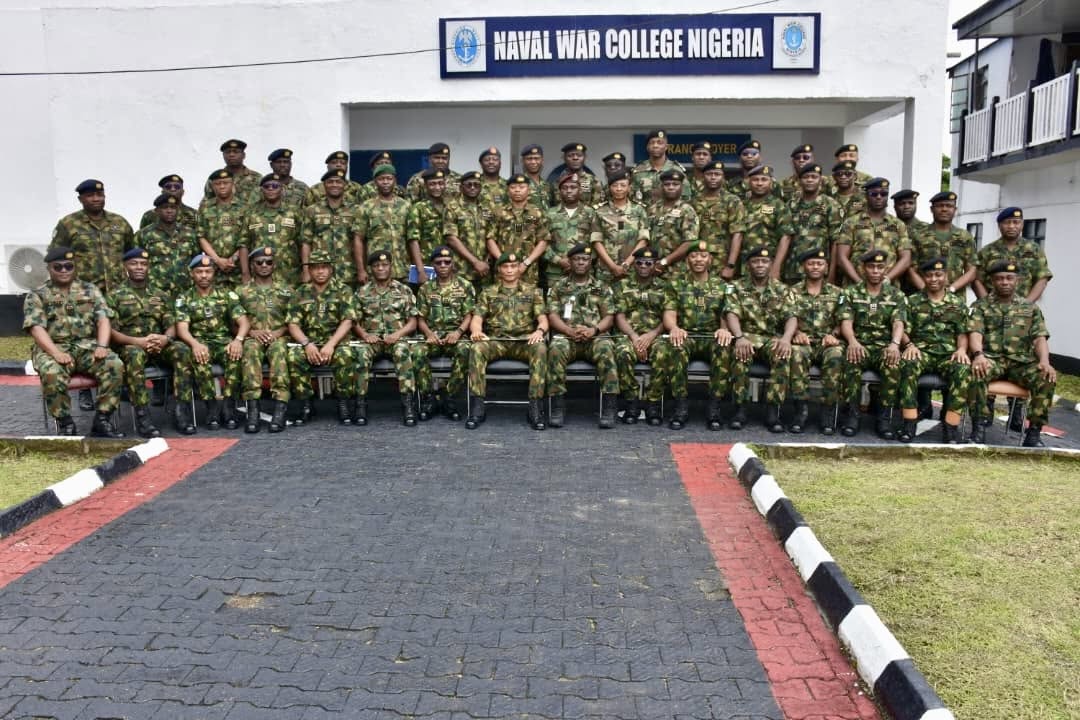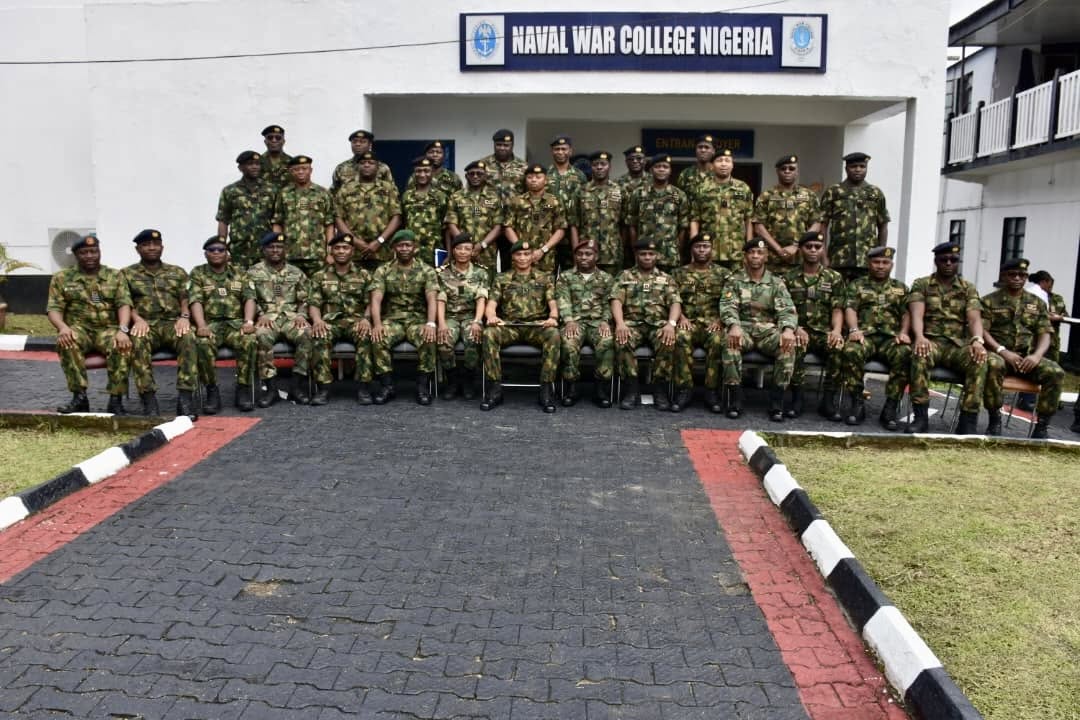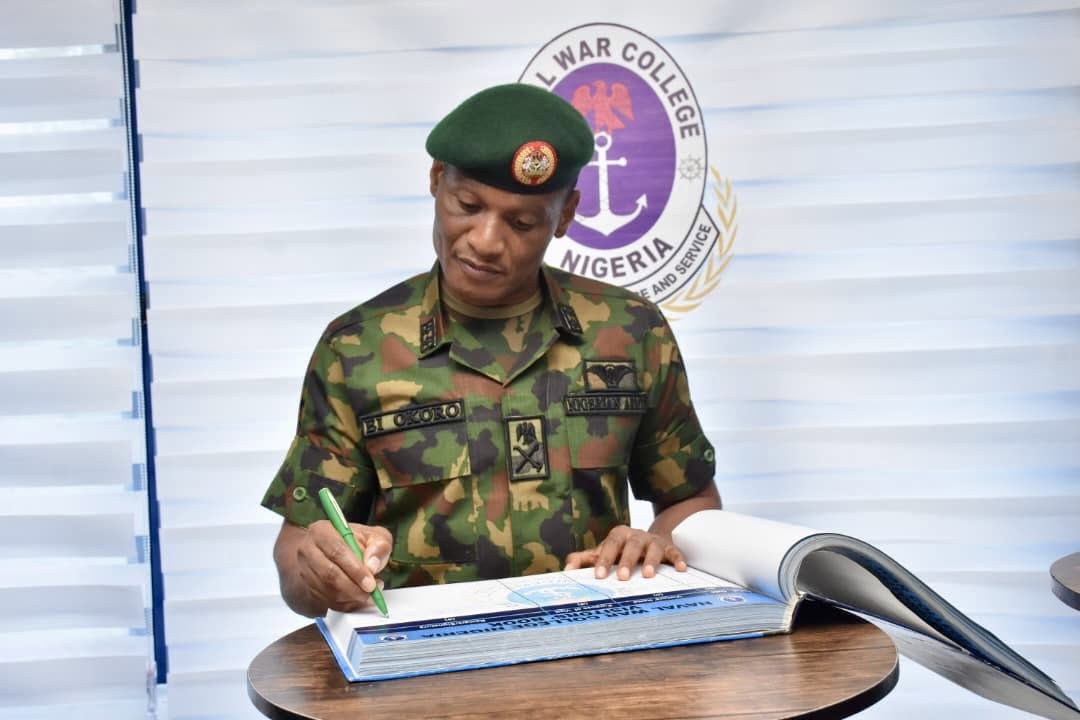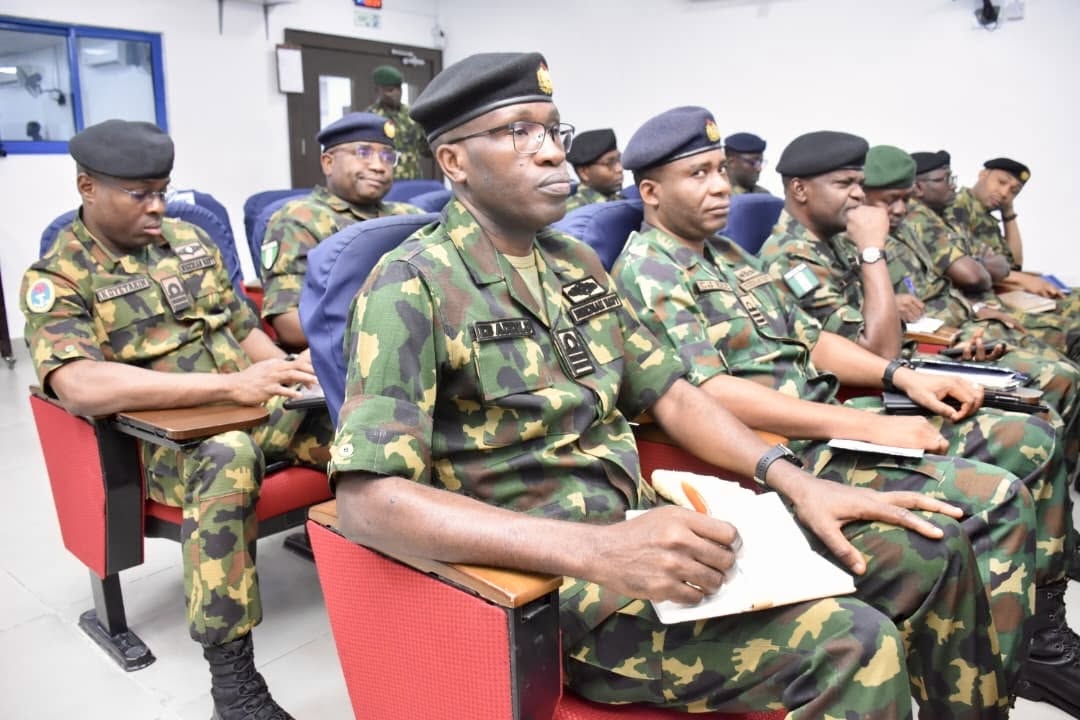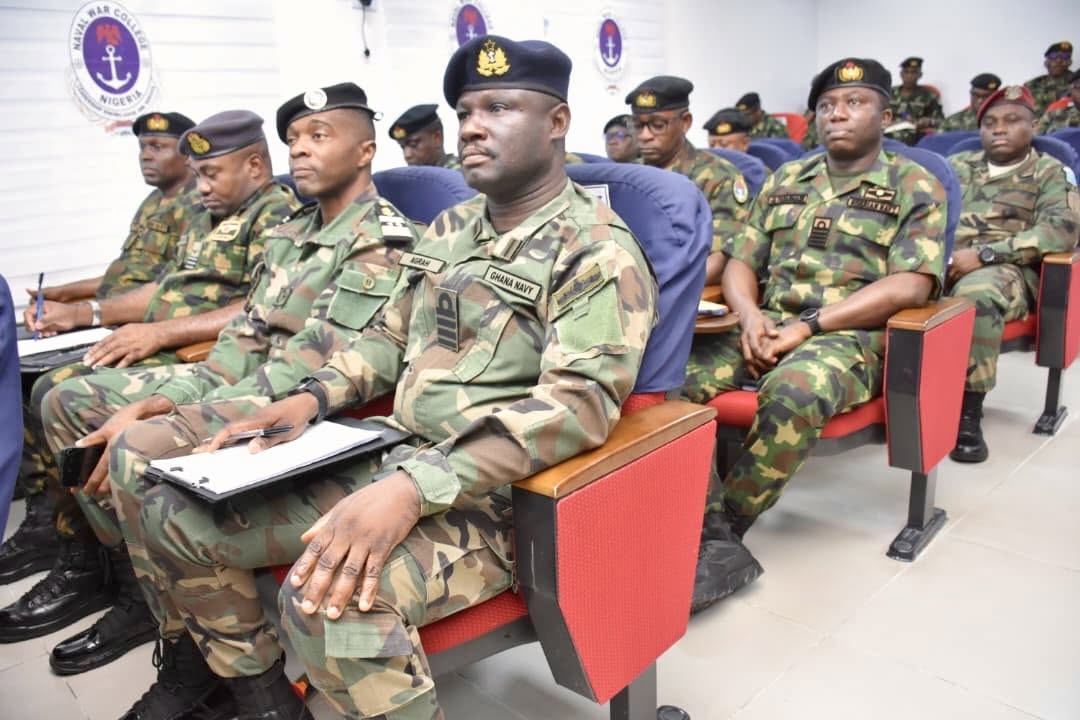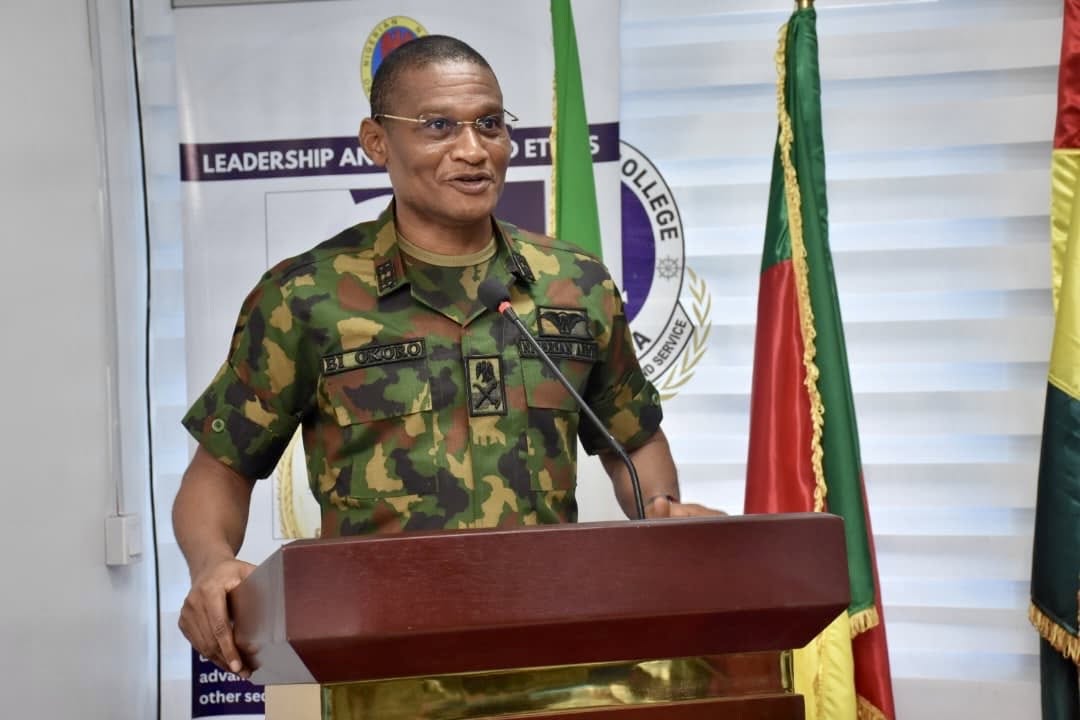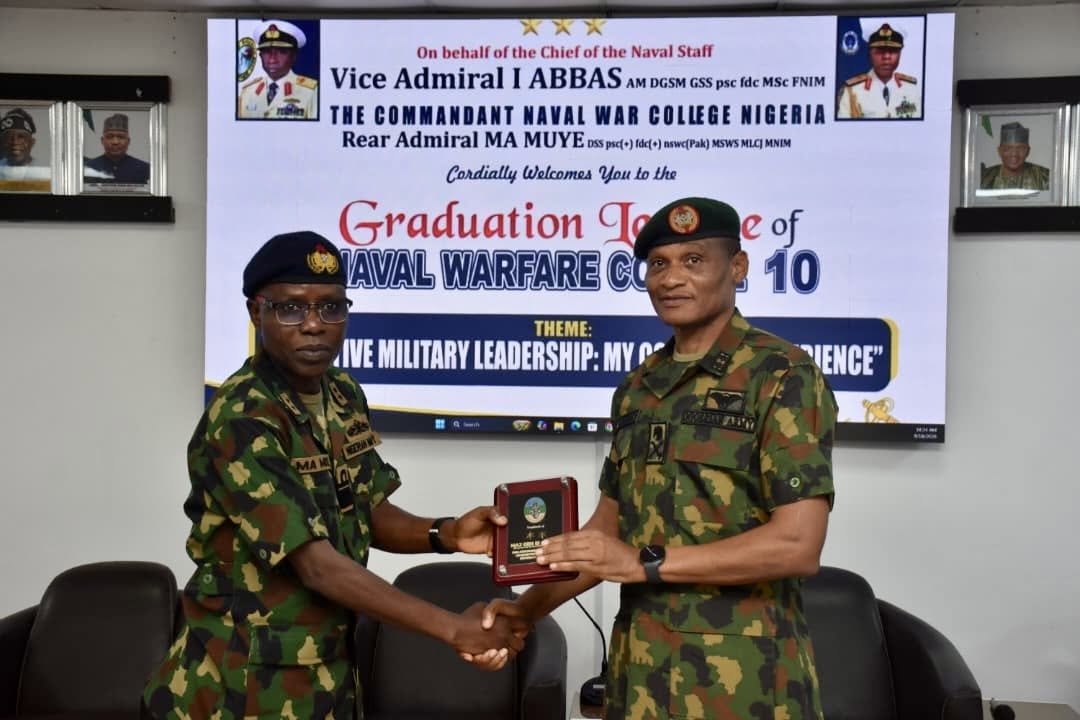
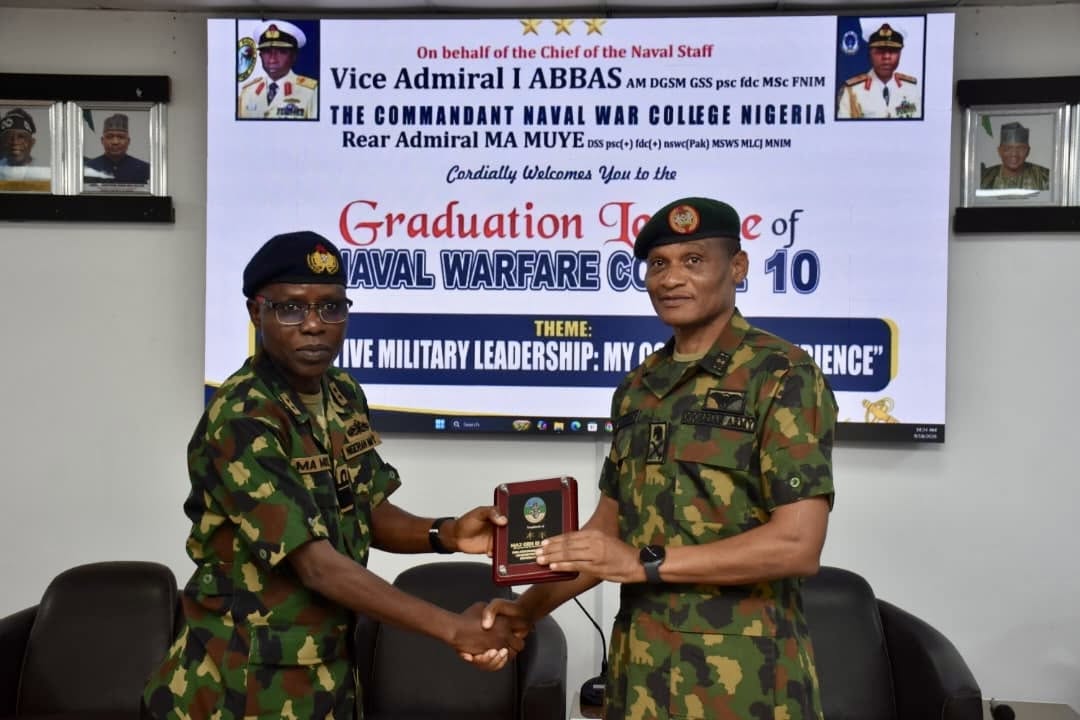
On Friday, 18 September 2026, the graduation lecture for Naval Warfare Course 10 was held at the Naval War College Nigeria (NWCN) Auditorium. The lecture formed part of the graduation activities designed to intellectually engage the graduating participants and prepare them for the challenges and responsibilities of military leadership. The lecture, titled “Effective Military Leadership: My Command Experience”, was delivered by the General Officer Commanding (GOC) 6 Division Nigerian Army (NA) and the Land Component Commander (LCC), Joint Task Force South-South (JTF SS), Operation Delta Safe (OPDS), Major General Everest Ifeanyi Okoro. The lecture was aimed at bridging the gap between theoretical knowledge and practical command experience, with particular emphasis on the demands of strategic military leadership in a joint and multi-agency security environment.
Major General EI Okoro underscored the importance of effective military leadership and its direct implications for commanders. He noted that while command provides formal authority, effective military leadership earns trust, loyalty and cooperation. He identified character, competence and compassion as essential attributes of effective strategic leadership, stressing that character establishes trust, competence builds professional credibility, while compassion strengthens the human connection necessary for commitment and resilience. Addressing the contemporary security environment, the GOC 6 Division NA and LCC JTF SS OPDS observed that military operations are increasingly conducted against complex and evolving threats, including insurgency, banditry, kidnapping, piracy and illegal oil bunkering. He stressed that military leadership requires commanders to consider not only immediate operational objective but also the wider security, economic, social and institutional consequences of military decisions. While sharing insights from his command experience, the senior officer highlighted decision-making under uncertainty, empowerment of subordinate commanders, joint and multi-agency cooperation, and leading through influence, as key lessons for the participants. He emphasized the need for commanders to provide clear direction while empowering competent subordinates to effectively execute assigned tasks.
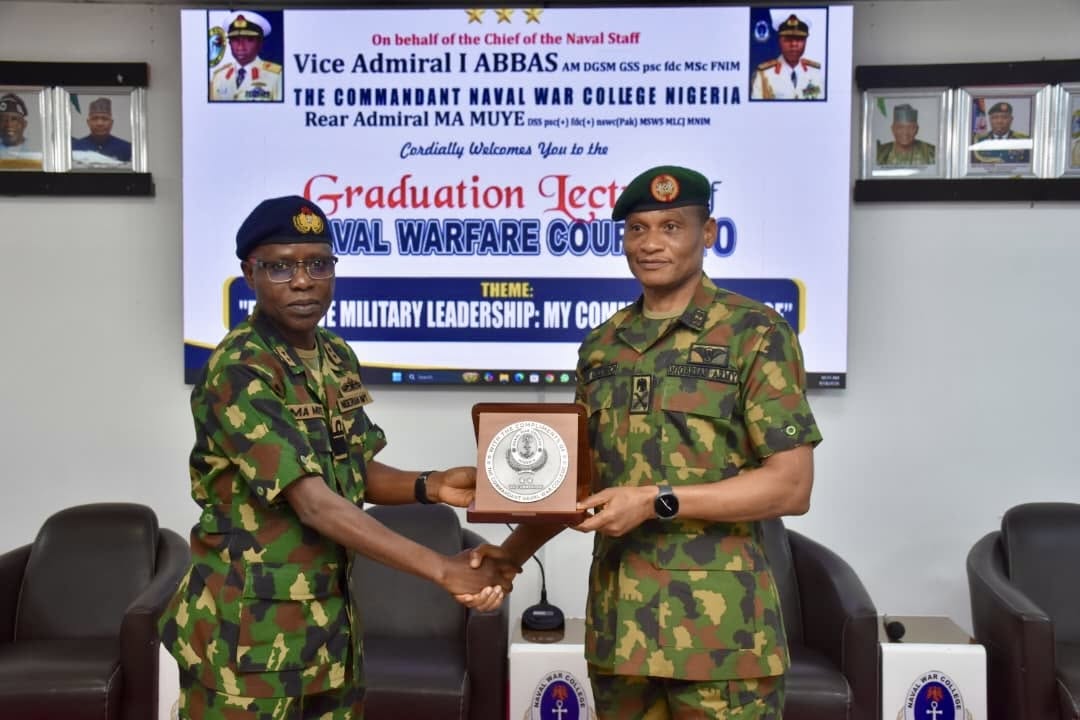
In his remarks, the Commandant NWCN, Rear Admiral MA Muye, appreciated the Guest Speaker for sparing time from his busy schedule to deliver the lecture. He described the lecture as ‘insightful and thought-provoking’, reminding the graduating participants that leadership in today’s military goes beyond command – it requires vision, innovation and adaptability. He thereafter concluded his remarks by encouraging the graduating participants to note the lessons from the lecture for future applications as operational-level commanders.